

Crick Boat Show may draw the crowds but step a little beyond the showground where you’ll notice that the noise softens, and the wind whispers in a different direction. The village of Crick, the place behind the name, reveals itself slowly, like a story or an old legend.
The name itself likely comes from the Celtic cruc, meaning hill, and once you’re standing there, you feel it: the land rising and falling in long, gentle breaths. These slopes have held human footsteps for thousands of years. Beneath the fields lie traces of Bronze and Iron Age life; round houses, hearths, the faint outlines of communities who watched the same skies but lived in a world we can only imagine.
By the Domesday survey of 1086, Crick was a modest settlement of around 32 households, perhaps 120 souls in all. A cluster of dwellings, smoke curling from thatched roofs from local fields, the rhythm of farming life marking the seasons. Over centuries the village grew, reaching 600 residents by 1720 and just under 2,000 today. Yet even now, Crick feels intimate. A place where the past lingers in the corners of lanes and the curve of old stone walls.
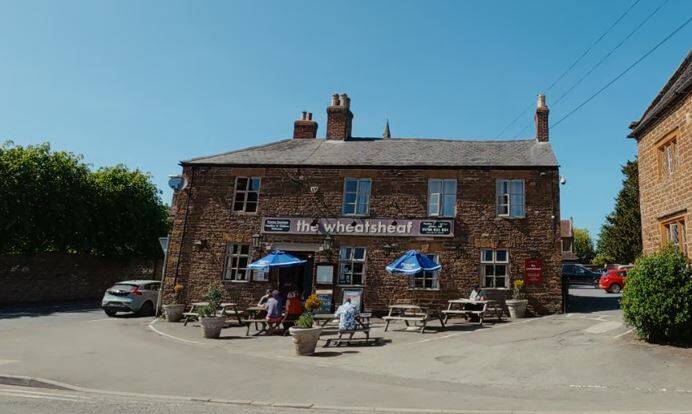
The Wheatsheaf, Crick (Image: © Locks & Legends, 2026)
The canal arrived in 1814, carving a new chapter through the landscape. The Leicester Line of the Grand Union Canal pushed through the hillside with the creation of Crick Tunnel. It was a feat that required some three million bricks, many made from the very earth beneath local feet. For more than a century, the canal thrived and the wharf provided. Coal and lime from the Midlands passed through, and goods travelled as far as London. Even now, the canal runs in quiet parallel with the railway and the ancient route through Watford Gap, a corridor that has carried travellers for two millennia.
But among all the stories tied to this stretch of water, one name stands out like a lantern in the dusk: George ‘Cabin’ Smith.
Born in Staffordshire in 1831, Smith’s childhood was shaped by the brutal labour of the brickyards. By seven, he was already working—working hard. By adulthood, he had risen to manager and in 1859, he made a choice that would define him. He refused to employ children. He had seen too much suffering, especially among the families who lived and worked on canal boats.
Smith became a relentless advocate for the welfare of canal children. His efforts led to the Canal Boats Act of 1877, which required boats to be registered and inspected to protect the health and safety of the young. He fought for education, for dignity, and for the simple right of a childhood.
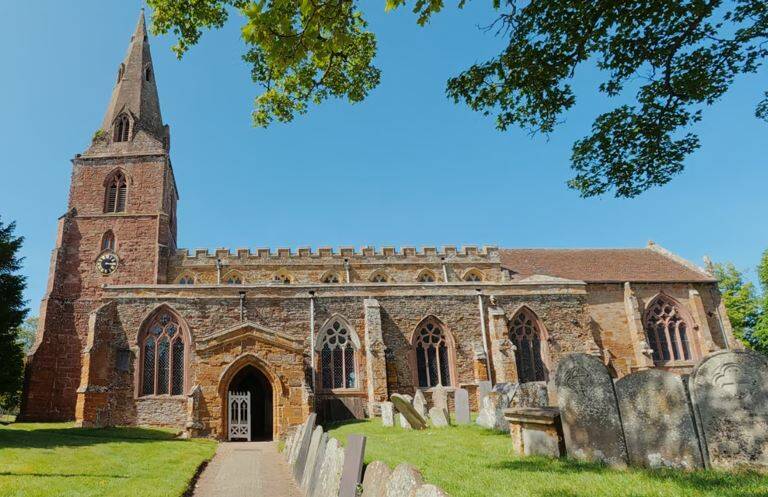
St Margaret of Antioch Church, Grade 1 Listed Building (Image: © Locks & Legends, 2026)
His campaigns came at quite a cost. Industry backlash saw him dismissed from his managerial post in 1873. He endured poverty, hunger, and strain while supporting his family. But he never stopped. Eventually, in 1884, he received £300 (in today’s money, that’s just over £48k) from the Royal Bounty Fund, enough to buy a home in Crick. It was there, in this quiet village shaped by hills and water, that he spent his final years before dying of liver cancer at 64.
Today, Crick is known for its annual boat show, its marina, and its warm welcome. But beneath the surface lies a place shaped by ancient hands, canal builders, and reformers who refused to look away. You can still feel the sense that stories settle there, waiting for those of us who listen.
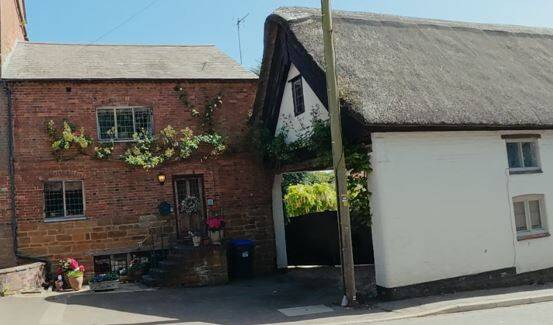
Crick Village (Image: © Locks & Legends, 2026)
Information provided by https://www.crickhistory.org/ and https://www.historytoday.com/archive/george-smith-coalville
If you would like to see our videos taken at Crick Boat Show (and a highlights video featuring this beautiful village), you can find all of them on our Crick Playlist
And if you would like to see what else we can do, you can find the first video on our channel here: Exploring Scotland's Union Canal, or our latest video here: Ghosts of the Lancaster Canal
Add comment
Comments